

We Wrote a Book!
A conversation about the surprises and delights of (ghost)writing a memoir

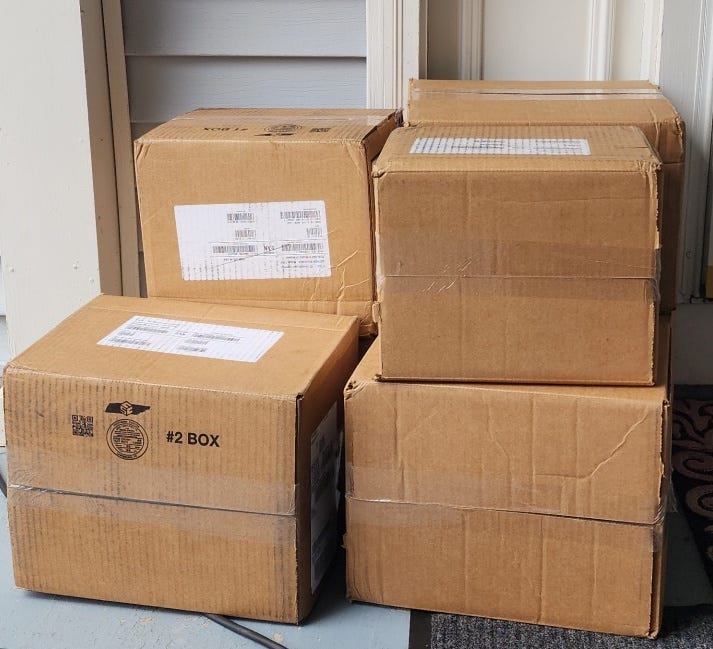
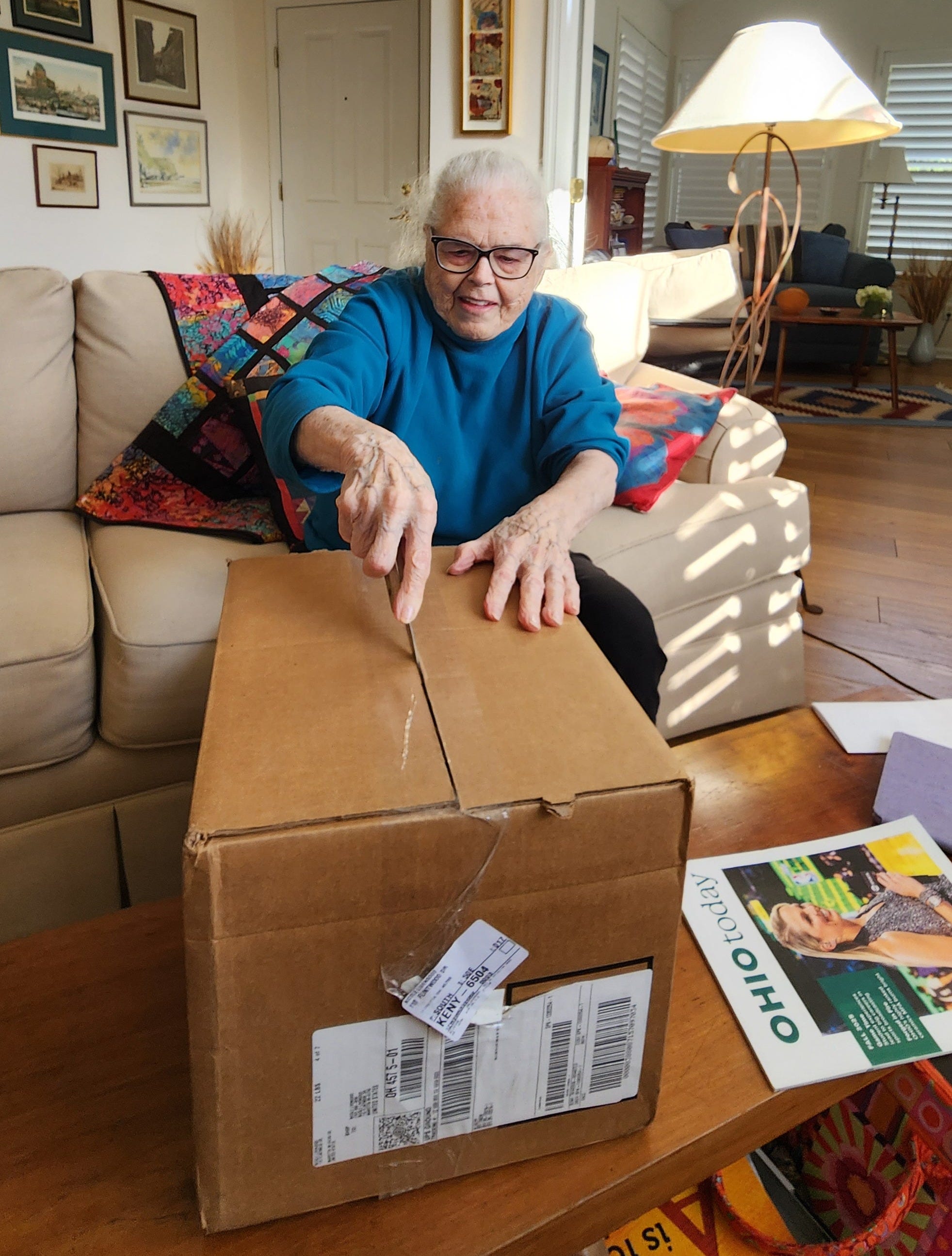
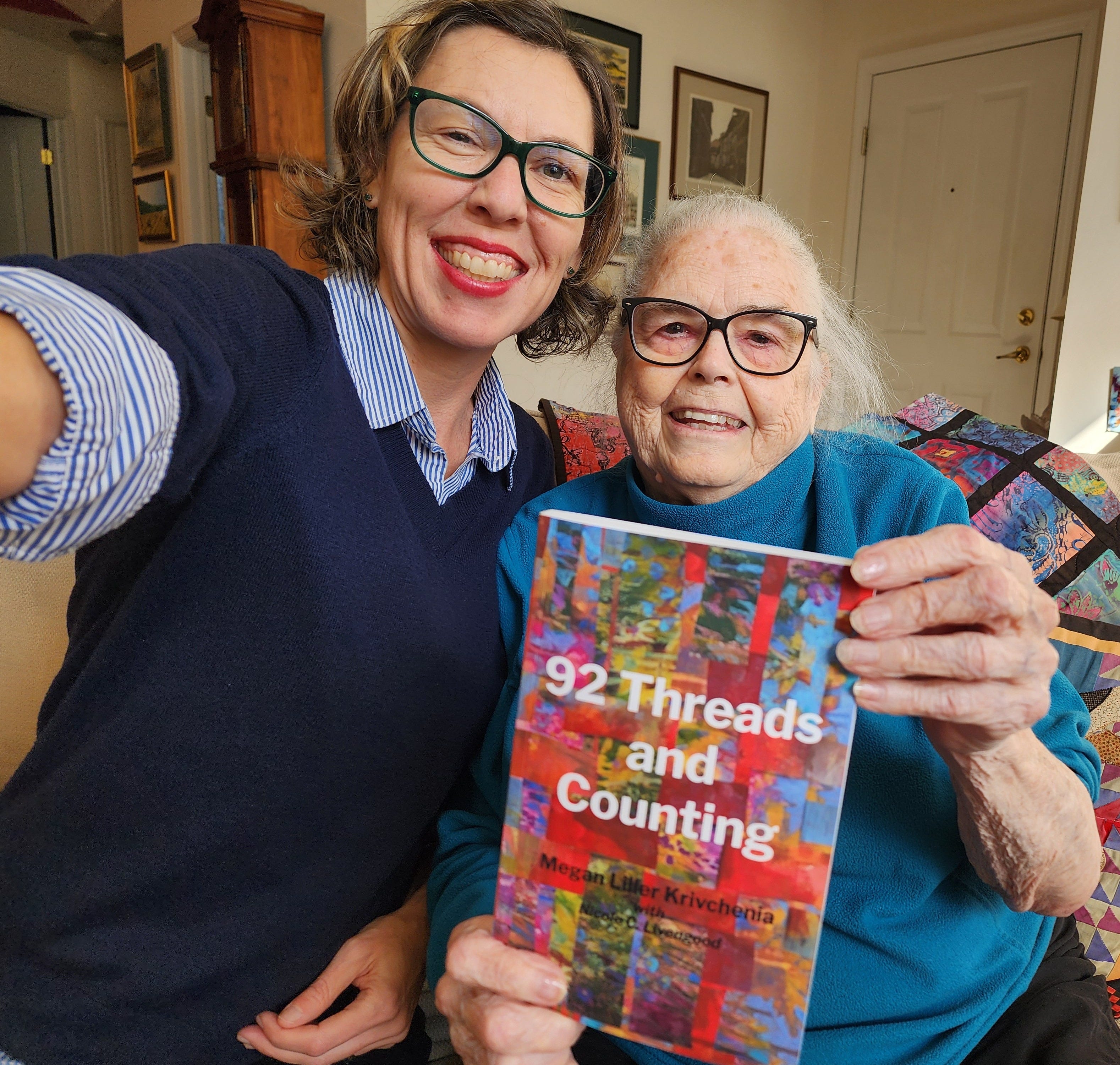
In the fall of 2024, an unexpected opportunity came my way: to ghostwrite a memoir with a dear friend, Megan. We spent hours together over the fall and winter as she shared her stories and I asked her questions. In the spring and summer of 2025, I drafted and then we re-drafted. We found an editor, collaborated with a cover artist, and I frantically learned about self-publishing. Then, all of a sudden– it was over. 140 pounds of books arrived on my doorstep and I rushed a box to Megan. It’s over – but just beginning. The book is in the mail to her friends, family, and intentional family, and her amazing life continues to make an impact.
We sat down and had a conversation about the process: how the book began, our experiences and expectations, and the surprises along the way. Below is an edited version of our laughter-filled conversation.
As is common with memories (and something very much discussed by memoir authors) we recalled the memoir’s origins very differently…
How did the memoir begin?
Megan: How it really began was my dear friend Nicole asked if she could write my memoir. Nicole had resigned from her position at Marietta College and I think looking to develop a new skill set and probably a funding stream for her new life. Over the years I had thought, as I assume most people at 92 have, that there were things I should record: I think that’s probably something that the kids and the grandkids should know…
Something I wanted my grandkids to know was about their grandfather. A couple of my granddaughters had said to me at one point in time, “Why did you marry him [their grandfather], Granny?” And I thought then, Oh, they didn’t know the bright young medical student in 1953 when we got married in 1953, and I should let them know about a different part of their grandfather. And I thought, Oh, some day I should write that down, but I knew in my heart of hearts that I never would. And then along came Nicole –
[I start giggling.]
It’s now a published book, and I am proud, and I hope she is too, to hand it to my grandchildren and great-grandchildren and maybe down the generations to come.
Me: [Still giggling.] I am proud, proud of both of us, but I remember it starting differently.
Megan: Oh, how do you remember it starting?
Me: Oh, this is funny….I remember you sharing your stories in bits and pieces each time we had coffee. I remember saying, “have you thought of doing an oral history?” We kind of talked about it over a couple of coffees, and then I think you said something like, “I would, if you’d do it dear…” And then it evolved into a memoir. So that’s how I’ve been telling the story.
Megan: Ohhhhh….isn’t that interesting?! And I’ve put it all on you!
Me: What surprised you about this process?
Megan: It was a very positive adventure. I don’t think I knew what I was getting into particularly, and I don’t think you knew what you were getting into. It was like both of us were finding our way down this new path, and you created an environment which made it very easy to talk to and to talk about hard stuff. I had sort of thought, if I am going to do this, I need to be as truthful as I possibly can, and I don’t want to hurt anybody. You were the English person and so I remember telling you some hard stuff and saying, “You can clean that up and make it palatable in some way.”
Me: I remember sometimes you’d say, “I don’t want this in the book, I just want to tell you this part.” And then I’d transcribe and write “DO NOT PUT THIS IN THE BOOK!” in my notes.
It has been an adventure. I think we thought it’d be a 20-page typed thing at first, and then we realized there were a lot more than 20 pages. And it was wonderful, it was beautiful.
***
Megan: Something else that surprised me was I didn’t expect you to do any research. I just thought that what I said, you would take and that would be it. I remember saying to you sometime, “I didn’t think you’d be doing all of that research,” and you responded to me, “I’m an academic, that’s what academics do,” as if I should have known that research would be a part of it!
It was a great part of it, because you reminded me of things I had forgotten, and certainly in some ways made it more real.
Me: I don’t think I meant to research. I think it started less out of my training, although that definitely came in, but also I’m curious. I was curious your ancestor who was a Hessian. I used to teach Ben Franklin’s satire about the Hessians… and now I knew someone related to a real Hessian! All of sudden I was reading about the Hessians, and why they came to the colonies, and how they were treated. I learned all sorts of stuff that didn’t need to be in your book. And I wondered if I could find info about you, and I found digitized copies of Wheeling, West Virginia newspapers. You were in every story! That just started as curiosity, but then I think it deepened things.
Megan: What was the hard part for you?
Me: One of the biggest challenges was trying to figure out how to write a story with a plot. It’s a true story, but all of my professional writing has been academic and argument-based. Now it was more creative. The 1970’s were hard to write because they were so dramatic. I kept thinking about it in terms of movies. It would have been action scene after action scene after action scene, without any humor or room to breathe. I had to figure out chronology, and pacing, and chapter length…it was a good learning experience, to do that and see how I could transfer my academic skills like research while stretching myself to develop new skills.
Megan: Something that surprised me was when you asked about voice. Early on you asked me who my audience was, and it was clearly my grandchildren and great-grandchildren and my kids. Then you gave me three chapters you’d written, and you wanted to know if you had found my voice. I shared with one of my sons and my niece, and they said you had.
…I don’t think there are more surprises, but what I was so grateful for was that you were doing it, because of all the work you put into finding out how to self-publish, and how you learned to make a picture look really good, because it was the first time for you. You spent an enormous amount of work and time doing that, so the end product is what it is.
Nicole: What disturbed you or intrigued you about the process?
Megan: There wasn’t anything that disturbed me. It made me think. I wanted to be thoughtful. You made that very easy, because from my perspective, mostly I was telling you stories, and something I said would click off something in my head to another story that was often probably not in sequence, or something very different, and then I’d click to something else. I wasn’t ever sure how you were going to pull all of that together.
[I laugh]
But you made it really easy to just let me go. That was very helpful, dear.
…
Something that was unsettling was as I look back at all of those years, I see patterns that get repeated. I know that happens in our lives, and we don’t know them…I learned some things as I stood back, and especially as I thought about the crisis that came from the move from Wheeling to Marietta. It’s [now] one of the conversations I want to have with my adult children.
Me: The crisis and those painful moments were some of the most difficult things for me, as your writer and as your friend, because I knew they were hard. We had some hard days. I tried to pace the questions, or to ask “are we in a place where we can talk about this?” We had to return to some events and moments a few times. We did that a lot. We’d touch on a topic, and circle back and go deeper. It was over the course of months. I think the book is the richer for it.
Megan: Has it turned out how you wanted it to turn out?
Me: It has been so remarkable. I don’t think I had expectations. I think you’re right. We were both like, “let’s do this!” For about a month I’d come over, and I’d get in the car and ask, “What am I doing? I have no clue. I’m just making it up.” But we were both making it up–
Megan: –as we went along.
[Both laughing].
Me: I think my favorite part of this process is right now, where we’re going, “Oh my gosh! Look at all of this! Look at all of the gifts…”
Megan: The few people who I’ve sent it to now, I’ve gotten such incredible, and positive feedback. It has encouraged me. On the one hand, when you hand your memoir to somebody, there’s a part of me that feels really vulnerable, at risk, that I’m trusting you with this…but the feedback I’m getting I am feeling less and less that way.
***
I’ve shared with you about how one friend has read it, and shared that it’s already impacted her own life. She’s already thinking about her own history, and valuing it. And I am just so grateful that my friend T. asked for a copy early, because we thought the book would come out a Christmas, and she knew she probably wasn’t going to live until then. You managed to put together a manuscript for her and she got it in time that, in her dying process….I think that book offered not just to T., but to her family….a gift. Her sister J. emailed me and shared that it generated conversations that need to be talked about when somebody is in a dying process. Who thought the book would do that kind of thing?
Me: I haven’t distributed my copies at all, so I’m living vicariously right now.
Something that has fascinated me is the doors this project has opened; I wasn’t at loose ends after I resigned, but just holding my hands open, like “Ok. Here I am. What next?” I’ve learned working with you on this project that listening is something that I love to do. To be able to say to someone, “it seems like there’s a story there” and then deeply listen is incredible. Even if I never ghost write another memoir, to be able to encourage people to see that their stories are valid and that people care…it’s a ministry to listen. What we’re seeing with your book is that people share their stories and they ripple outward. Sometimes there’s just one story that one person needs to hear…. That’s been the biggest blessing!
Megan: It’s going to be an ongoing adventure, as people get it and respond to it, it kind of stays alive. And that’s very exciting!
I love this story! Congratulations to you both!
This is wonderful. Can't wait to read the book!